White Gold and Coastal Craft: Road-Tripping America's Artisanal Salt Harvest Trail
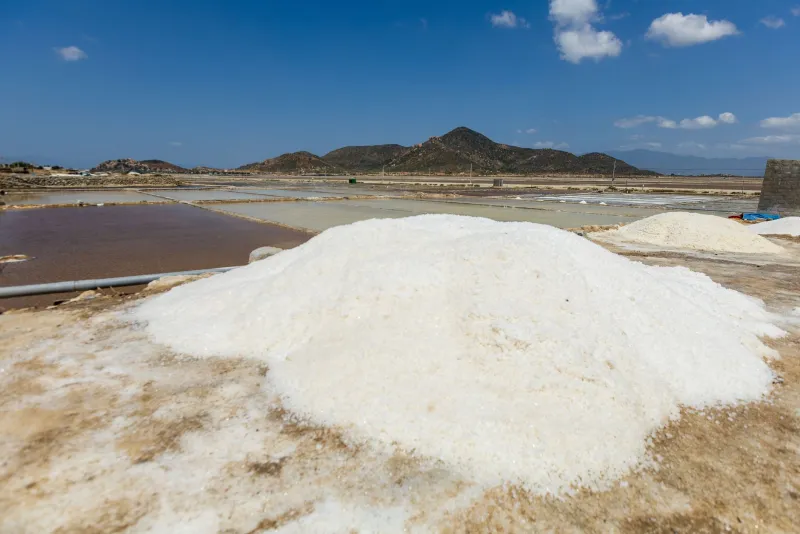
Pull a box of sea salt off a grocery store shelf and the label will probably say something like "hand-harvested" or "artisan-crafted" next to a photograph of a coastline you'll never visit. Now imagine actually going to that coastline. Watching the tide come in and recede. Talking to the person who rakes the crystals. Tasting salt that was ocean water twelve hours ago.
That experience exists in America, and it's more accessible than you'd think — if you know where to look and you're willing to build a road trip around it.
Artisanal salt production never entirely disappeared from US coastlines, but it's been experiencing something of a quiet renaissance over the past decade. Small operations from the Lowcountry of South Carolina to the bay shores of Northern California are producing salt that's genuinely different from the industrial product — different in mineral content, in texture, in flavor, and in the story attached to it. Visiting them is part food tourism, part maritime history lesson, and part reminder that some of the most interesting things happening along America's coasts don't involve surfboards or whale watches.
Start in the South Carolina Lowcountry
If there's a spiritual home for American coastal salt culture, it might be the tidal marshes of the South Carolina Lowcountry. Salt has been harvested in this region for centuries — by Indigenous communities long before European contact, and later by enslaved people whose labor built the colonial salt economy of the Southeast.
Today, a small group of producers is working to revive and honor those traditions. Barrier Island Salt Co., based on Edisto Island, is among the most visible. They harvest salt from the waters surrounding the ACE Basin — one of the largest undeveloped estuaries on the East Coast — and they're deliberate about connecting their product to the full weight of its regional history.
Visitors can arrange tours through the operation, and the surrounding area is worth at least a long weekend. The ACE Basin itself is extraordinary — a mosaic of tidal rivers, maritime forest, and open marsh that feels genuinely remote despite being within a couple hours of Charleston. Combine a salt farm visit with a paddling trip through the basin and you've got the bones of a genuinely memorable coastal itinerary.
The San Francisco Bay Salt Ponds
Swing to the opposite coast and the scale shifts dramatically. The South Bay Salt Ponds — a series of geometric evaporation flats visible from the air as a patchwork of pink, red, and orange — were once the largest salt production operation west of the Mississippi. Cargill operated them for decades before selling the majority of the land to state and federal agencies for wetland restoration.
What remains is a fascinating hybrid: part working industrial operation, part restored tidal wetland, and part unexpected wildlife haven. The ponds support enormous populations of migratory shorebirds, and the South Bay Salt Pond Restoration Project has become a model for large-scale coastal habitat recovery.
For travelers, the Don Edwards San Francisco Bay National Wildlife Refuge offers trails and a visitor center where you can learn about the ecological and industrial history of the ponds. The views across the flats — especially at sunrise when the colors are at their most surreal — are genuinely otherworldly.
For the artisanal angle, look to smaller producers like Sonoma Salt in the North Bay, who harvest from the tidal flats of San Pablo Bay and offer a product that tastes noticeably different from anything you'll find in a chain grocery store.
Maine's Cold Water Salt
The Gulf of Maine produces some of the coldest, cleanest seawater on the Atlantic seaboard, and a handful of small producers have built businesses around harvesting it. Maine Sea Salt Company, based on Marshfield Marsh near Jonesport, is among the oldest and most established, having been producing since the 1990s.
The operation is small and intentionally low-tech — seawater is pumped into greenhouses where solar energy and wind drive evaporation, and the resulting crystals are raked by hand. Tours aren't always available, but the company sells directly and ships nationwide, and the coastal drive through Washington County — some of the most sparsely populated coastline in the eastern US — is reward enough for making the trip.
This is the far end of the Maine coast, past Bar Harbor and well beyond the tourist infrastructure most visitors encounter. The landscape is raw and quiet in a way that's increasingly rare on the East Coast, and combining a salt production stop with a few days exploring the Bold Coast Trail makes for a genuinely adventurous itinerary.
What to Ask When You Visit
The best salt producers are also, almost universally, interesting people — usually with strong opinions about water quality, tidal cycles, weather patterns, and the specific mineral character of the water they're working with. If you get the chance to talk to them, a few questions tend to open up good conversations:
Where exactly does your water come from? The answer reveals a lot about the flavor profile of the salt and the health of the surrounding ecosystem. Producers who can answer this specifically are paying close attention to their environment.
How does the season affect what you're making? Artisanal salt production is deeply tied to weather — evaporation rates, humidity, temperature, and rainfall all influence the final product. Most producers have strong feelings about which time of year yields their best salt.
What do you do with the different crystal sizes? Salt harvested at different stages of evaporation produces dramatically different textures, and most small producers have developed specific uses or markets for each grade.
What's the history of salt production in this specific place? This question almost always leads somewhere interesting — to Indigenous practices, colonial economies, or the industrial operations that preceded the current revival.
Building the Route
A dedicated salt harvest road trip is probably a multi-destination affair rather than a single continuous drive — the operations are scattered enough that chasing them all at once would feel more like a logistics exercise than a journey. Better to incorporate a salt farm visit into a broader coastal itinerary.
The South Carolina Lowcountry pairs naturally with a Charleston base and a drive down the coast toward Savannah. The Bay Area salt ponds fit into any Northern California coastal route. The Maine producers slot into a Down East adventure that most travelers never get around to making.
In each case, the salt is a reason to slow down, to have a conversation, and to taste something that's genuinely connected to the water you've been watching all week. That's the whole point of traveling along the coast in the first place — not just seeing it, but understanding what it actually produces.
Bring an empty jar. Most producers sell directly, and the salt you carry home will taste like the specific stretch of ocean you were standing next to when you bought it.