Sunken Legends: The Best Beginner-Friendly Shipwreck Dives Along America's Coastlines
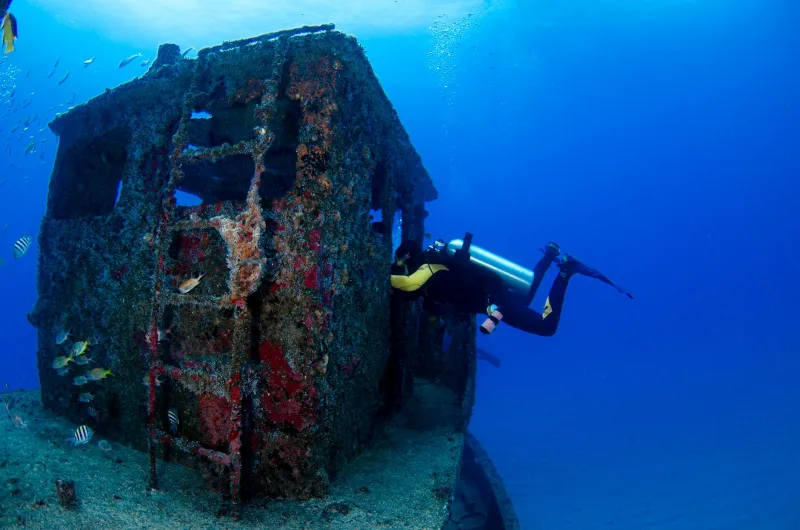
There's something almost cinematic about sinking beneath the surface and watching a rusted hull materialize out of the blue. Shipwreck diving occupies a singular space in the adventure travel world—part history lesson, part treasure hunt, part meditation. And while Hollywood tends to make it look like the exclusive territory of Navy SEALs and obsessive Jacques Cousteau disciples, the truth is that a solid chunk of America's most spectacular underwater wrecks are completely within reach of recreational divers with basic to intermediate certification.
So if you've got your Open Water card, or you're thinking about finally getting it, this one's for you. We've mapped out a loose coastal road trip framework—hitting the Great Lakes, the Atlantic seaboard, and the Gulf Coast—that puts some of the country's most historically rich and visually stunning shipwrecks right in your dive bag.
Why Wreck Diving Hits Different
Ask any wreck diver what got them hooked, and you'll hear variations of the same story. "The first time I dropped down on a wreck, I forgot I was even diving," says Marcus Tillman, a dive instructor based out of Wilmington, North Carolina, who has logged over 400 wreck dives along the East Coast. "You're not just looking at fish anymore. You're walking through someone else's history."
That's the thing about shipwrecks—they're time capsules. A freighter that went down in 1942 still has its telegraph equipment bolted to the bridge. A schooner lost in a Lake Michigan storm might still have its cargo hold intact. Every wreck has a story, and diving it means you get to be the one who shows up to listen.
The Great Lakes: Cold, Clear, and Absolutely Wild
If you've never considered the Great Lakes as a dive destination, prepare to have your mind rearranged. The cold freshwater preserves wooden wrecks in ways that saltwater simply can't, and visibility on a good day can stretch to 40 or 50 feet. Lake Superior, Lake Huron, and Lake Michigan collectively hold hundreds of documented shipwrecks, many of them accessible to recreational divers.
The Straits of Mackinac, Michigan, is a standout. The strong currents that make this stretch of water historically treacherous are also what made it a busy shipping corridor for centuries—which means wrecks. The Sandusky, a two-masted schooner that went down in 1856, sits at around 80 feet and is widely considered one of the finest wooden wreck dives in the country. Visibility is often excellent, and the preservation is remarkable. Local dive operators in Mackinaw City run regular guided trips and can pair you with a divemaster who knows every inch of the hull.
Water temperatures in the Straits run cold even in summer—you'll want a drysuit or at minimum a thick wetsuit—so check with your outfitter on gear requirements before you book.
The Outer Banks, North Carolina: The Graveyard of the Atlantic
North Carolina's coastline earned its ominous nickname honestly. Thousands of ships have met their end in the shallow, shifting waters between Cape Hatteras and Cape Lookout, and today that legacy makes the Outer Banks one of the premier wreck diving destinations in the entire country.
For recreational divers, the U-352—a German submarine sunk by the U.S. Coast Guard in 1942—is practically a rite of passage. Sitting at about 115 feet off Morehead City, it's technically at the deeper edge of recreational limits, so you'll want to be comfortable and ideally have an Advanced Open Water certification before attempting it. The sub is remarkably intact, encrusted in coral and swarming with amberjack, and the sheer weirdness of hovering over an enemy submarine in American waters is genuinely hard to describe.
For something a touch shallower, the Atlas wreck near Hatteras sits at around 70 feet and offers a great mix of structure, marine life, and manageable conditions for intermediate divers. Dive shops in Hatteras Village and Morehead City run regular charter trips to both sites, and many offer guided wreck orientation dives for newer divers who want a hand-holding introduction.
Pro tip: Wreck diving off the Outer Banks is best from late spring through early fall. Winter swells and cold water temperatures make conditions significantly more challenging.
The Florida Keys: Warm Water, Big History
If you want wreck diving without the thermal layer, the Florida Keys deliver. The water is warm, the visibility is often stunning, and the artificial reef program has turned a handful of deliberately sunk vessels into world-class dive sites teeming with marine life.
The USNS General Hoyt S. Vandenberg off Key West is one of the most famous intentional sinkings in American history. At 522 feet long, it's the second-largest artificial reef in the world. Recreational divers can explore the upper decks and superstructure in the 40-to-60-foot range without pushing into technical territory. The sheer scale of the thing is staggering—you can spend multiple dives on this ship and still feel like you've only scratched the surface.
For something with more authentic historical grit, the Spiegel Grove near Key Largo—a decommissioned Navy landing ship sunk in 2002—sits partially upright at around 130 feet, though the upper sections come up to about 60 feet and are easily accessible. The ship's massive size and the explosion of coral and fish life that has colonized it over two decades make it one of the Keys' most beloved dive sites.
Dive operators throughout the Keys run daily wreck charters, and many offer nitrox fills for divers looking to extend their bottom time.
What You Need Before You Go
Let's talk logistics, because showing up without the right credentials or gear is how you turn an epic adventure into an expensive disappointment.
Certification: A basic Open Water certification will get you into most sites down to 60 feet. For the deeper wrecks—like the U-352 or the lower sections of the Vandenberg—you'll want an Advanced Open Water cert at minimum. Some operators also recommend a Wreck Diver specialty course, which teaches you about wreck navigation, buoyancy around fragile structures, and penetration diving basics.
Gear: A dive computer is non-negotiable. A dive light is essential even on open wreck dives—shadows inside hulls are darker than you'd expect. A surface marker buoy (SMB) is required by most charter operators and is just smart practice.
Seasonal timing: This varies wildly by region. Great Lakes diving is best June through September. Outer Banks diving peaks May through October. The Florida Keys are diveable year-round, though summer brings calmer seas and better visibility.
Guided vs. independent: For your first few wreck dives, go with a guided operator. Local divemasters know current patterns, entry and exit points, and which sections of a wreck are structurally questionable. That knowledge is worth every penny.
The Road That Leads Down
Here's the beautiful thing about planning a wreck diving road trip along the US coast: the journey between dive sites is half the adventure. Drive the Outer Banks Highway 12 at dawn with your gear loaded in the back. Cruise the Overseas Highway through the Keys with salt still in your hair. Take the ferry to Mackinac Island and watch the Straits from above before you drop beneath them.
America's shipwrecks aren't just dive sites—they're destinations. And the coastline that connects them is one of the great road trip routes on earth. All you have to do is show up, suit up, and go under.