Rust, Ruins, and the Sea: Road-Tripping America's Most Haunting Abandoned Maritime Sites
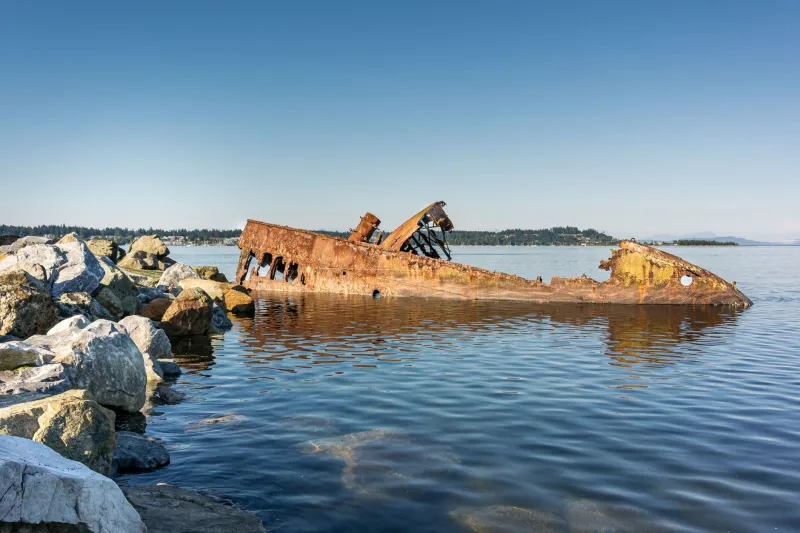
There's something about decay meeting saltwater that stops you cold. Maybe it's the way rust bleeds down the hull of a half-sunken vessel, or how an old lighthouse stands alone on a windswept spit of land, its keeper long gone and its light long dark. Whatever the pull, America's abandoned maritime sites have a gravity all their own — and for the right kind of traveler, mapping a road trip around them is about as rewarding as it gets.
These aren't theme park experiences. They're raw, weathered, and sometimes genuinely hard to reach. But that's exactly the point.
The Graveyard Fleet of Mallows Bay, Maryland
Start your journey on the Potomac River, about 40 miles south of Washington, D.C., where one of North America's largest ship graveyards quietly rots along a stretch of shoreline most people drive past without a second glance. Mallows Bay holds the remains of more than 200 vessels — many of them wooden steamships built during World War I that were later scuttled when they became too expensive to maintain.
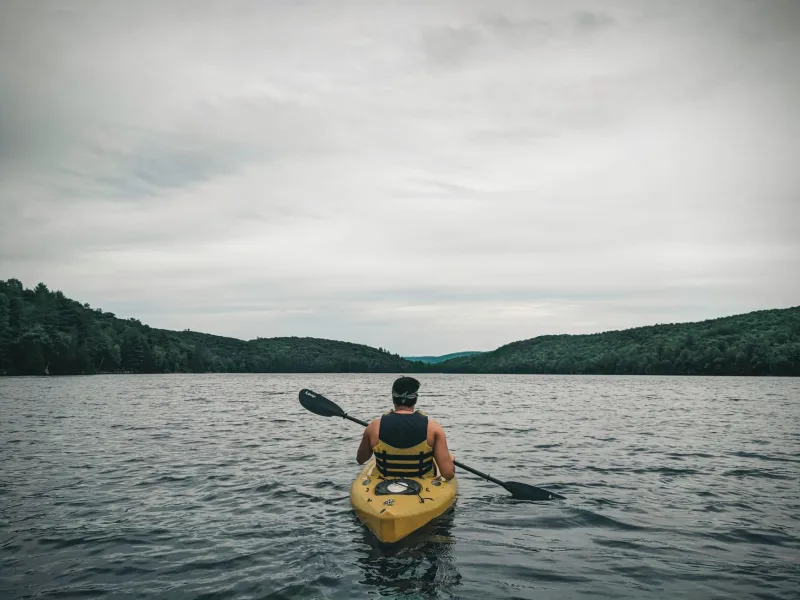
Today, the hulls have become their own ecosystems. Trees grow out of rotting decks. Herons nest in the ribs of century-old ships. The site is now a National Marine Sanctuary, and you can kayak through the ghostly fleet or hike the shoreline trails for a ground-level view. It's one of those places that feels like a secret even though it's sitting right there on the map.
Getting there: From D.C., take Route 210 south into Charles County. The Mallows Bay Park launch is on Wilson Landing Road. Kayak rentals are available nearby, and the site is free to visit.
The SS Palo Alto, Aptos, California
Head west to the California coast, where a concrete ship — yes, concrete — has been slowly surrendering to the Pacific for decades. The SS Palo Alto was built during World War I as an experiment in cement-hulled construction, saw almost no real service, and was eventually towed to Seacliff State Beach near Santa Cruz to serve as a floating amusement park in the 1930s. That venture went under (literally), and the ship cracked in half and settled into the sand, where it's been sitting ever since.
At low tide, you can walk out onto the old fishing pier that connects to what's left of the hull. The structure is closed to foot traffic directly on the ship — it's genuinely unstable — but the views from the pier are unforgettable. Pelicans roost on the rusted railings. Waves crash through the broken midsection. It's surreal in the best possible way.
Getting there: Seacliff State Beach is just off Highway 1 between Santa Cruz and Monterey. Day-use fees apply. Visit during low tide for the best views.
Fort Pickens, Gulf Islands National Seashore, Florida
Not every abandoned maritime site involves a ship. Fort Pickens, sitting on the western tip of Santa Rosa Island near Pensacola, is a massive 19th-century brick fortification that once guarded the entrance to Pensacola Bay — and later served as a prison for Apache leader Geronimo. The fort itself is partially restored, but the real draw is wandering the surrounding battery emplacements, gun mounts, and bunkers that stretch along the Gulf shore.
The combination of white-sand beaches, emerald water, and crumbling concrete military infrastructure is genuinely disorienting in the most fascinating way. You'll find yourself standing inside a WWII-era gun battery with the Gulf of Mexico sparkling just outside the opening, wondering how this place isn't on everyone's road trip list.
Getting there: Take the Gulf Islands National Seashore entrance off Route 399 on Santa Rosa Island. There's a small entry fee. The drive along the island itself is worth the trip on its own.
The Ships of Wrangell Narrows, Alaska
For the traveler willing to go further off the grid, the waters around Petersburg, Alaska are dotted with the rusting carcasses of old fishing vessels and cannery tenders that were simply abandoned in place when they stopped being useful. This isn't a curated attraction — it's just what happens at the edge of the world when boats get old and there's nowhere obvious to take them.
The best way to explore this area is by charter boat out of Petersburg, where local guides can take you through the narrows and point out the most dramatic wrecks. It's remote, it's raw, and it's about as "ocean wanderer" as it gets.
Getting there: Fly into Petersburg via Alaska Airlines connections through Seattle or Juneau. Charter boat operators in town can arrange narrows tours.
Tips for Visiting Abandoned Maritime Sites Responsibly
Before you start plotting your route, a few things worth keeping in mind:
- Check access rules before you go. Some sites are on protected federal land, and rules about what you can touch, photograph, or remove vary widely. Marine sanctuaries in particular have strict regulations.
- Never board a wreck without explicit permission. Even if something looks stable, it probably isn't. Rusted metal, rotted wood, and barnacle-slicked surfaces are a bad combination.
- Bring the right gear. Waterproof boots, layers, and a good camera are non-negotiables. Bug spray and tide charts are smart additions depending on where you're headed.
- Leave it exactly as you found it. The whole reason these places feel so powerful is because they're untouched. Keep them that way.
- Go at the right time of day. Low tide opens up access at coastal wrecks. Golden hour turns rust and decay into something genuinely beautiful. Plan accordingly.
Why These Places Matter
Abandoned maritime sites aren't just eerie backdrops for dramatic photos — though they're absolutely that too. They're physical records of American ambition, industry, war, and sometimes spectacular failure. The ships rotting in Mallows Bay represent a WWI-era industrial push that produced vessels nobody ended up needing. The SS Palo Alto is a monument to an engineering experiment that sort of worked, and then sort of didn't. Fort Pickens held a man who symbolized an entire era of American history.
When you stand next to these things — really stand next to them, close enough to smell the rust and hear the water moving through the hull — history stops being abstract. It becomes something you can put your hand on.
That's the real reason to road trip to these places. Not the Instagram moment, though those are pretty great. It's the feeling of being a small human standing next to something enormous and broken and still, somehow, beautiful. The ocean has a way of making everything feel that way eventually. These sites just make it happen faster.