Fading Light: What Warming Oceans Are Doing to America's Most Magical Bioluminescent Bays
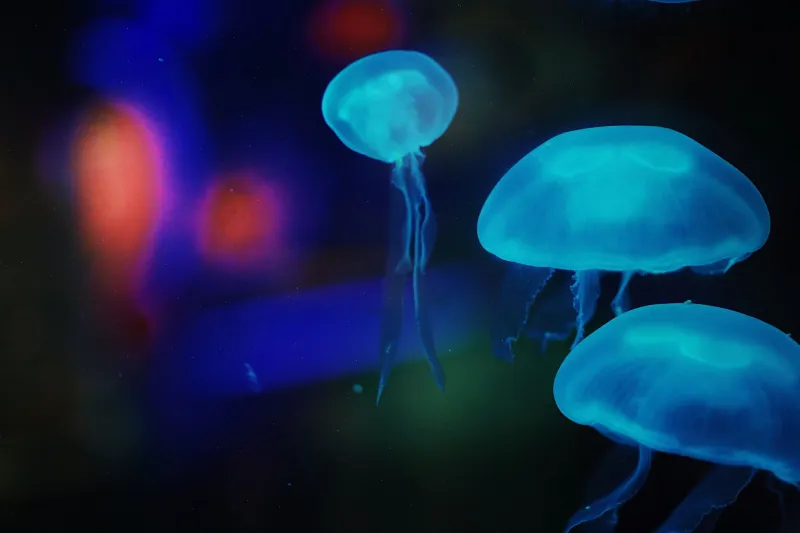
There's a moment, somewhere between dipping your paddle into dark water and watching it erupt in cold blue fire, when you stop thinking about anything else. Bioluminescence does that. It short-circuits the noise in your head and replaces it with pure, wordless wonder. For generations of coastal travelers, chasing that glow has been one of the ocean's most intimate gifts.
But the gift is changing. Quietly, incrementally, and in ways that don't always make headlines, America's bioluminescent displays are being reshuffled by warming seas, shifting currents, and the cascading effects of a climate that no longer plays by the old rules. Some places are glowing brighter than ever. Others are flickering. A few are going dark in ways that worry the researchers who study them.
So where does that leave the traveler who wants to witness this phenomenon before the map looks completely different? Let's get into it.
What Actually Makes the Water Glow
Before we talk about what's changing, it helps to understand what's happening in the first place. Most bioluminescent displays in American coastal waters are produced by dinoflagellates — microscopic, single-celled organisms that emit light when physically disturbed. Think of them as living glow sticks that respond to motion: a kayak stroke, a breaking wave, a fish darting through the shallows.
The density of these organisms in the water column determines how spectacular the show gets. That density, in turn, depends on water temperature, salinity, nutrient levels, and the presence of certain currents. Change any of those variables — and climate change is changing all of them — and you change the display.
"Dinoflagellate blooms are highly sensitive to thermal shifts," says one marine biologist based out of the University of Miami who studies plankton dynamics along the Florida coast. "We're seeing blooms occurring earlier in the year in some regions, later in others, and in some cases, the bloom conditions are being outcompeted by species that don't bioluminesce at all."
The Spots That Are Thriving (For Now)
Not all the news is grim. A handful of America's most celebrated bioluminescent destinations are still delivering extraordinary experiences, and a few are even seeing intensified displays — though scientists are careful to note that "more" isn't always better.
Mosquito Bay, Vieques, Puerto Rico consistently ranks among the world's most spectacular bioluminescent lagoons, and recent visitor reports suggest the glow remains vivid. The bay's enclosed geography concentrates dinoflagellates in ways that open coastlines can't replicate. However, researchers have noted that post-hurricane recovery and freshwater influx from storms have introduced new stressors that bear watching.
Tomales Bay, California has become something of a sleeper hit for bioluminescence chasers on the West Coast. Cooler Pacific waters have historically supported robust dinoflagellate populations here, and some kayak guides report that certain autumn nights still produce stunning displays. The caveat? The timing has become harder to predict.
Indian River Lagoon, Florida is a more complicated story. Parts of the lagoon still glow impressively, but the same nutrient pollution driving harmful algal blooms in other sections of the waterway is creating conditions where non-bioluminescent species are crowding out the light-producers. It's a patchwork now, where the difference between a magical night and a disappointing one can come down to which part of the lagoon you're paddling.
The Spots Sending Up Warning Flares
Bioluminescent Lagoon in La Parguera, Puerto Rico — another historically celebrated site — has experienced significant degradation over the past two decades, with researchers attributing part of the decline to warmer, more stratified water that disrupts the nutrient cycling dinoflagellates depend on. Visitor accounts from recent years describe displays that are a shadow of what was documented in earlier decades.
On the mainland, several Gulf Coast locations that once reliably produced late-summer glow events are seeing those windows compress. Warmer baseline temperatures are extending the conditions that trigger competing algal species, essentially crowding out the bioluminescent performers during peak travel season.
"The window of optimal conditions is narrowing in some of these places," notes one oceanographer who tracks plankton distribution along the Gulf. "What used to be a reliable six-week season might now be two or three weeks, and it's harder to predict when exactly that window opens."
The Northward Drift
One of the more fascinating — and underreported — trends in bioluminescence is the gradual northward shift of productive dinoflagellate habitat. As southern waters warm beyond the thermal sweet spot these organisms prefer, coastal zones in the mid-Atlantic and even parts of New England are occasionally experiencing displays that would have been unusual twenty years ago.
Kayakers in the Chesapeake Bay region have reported surprisingly vivid late-summer bioluminescence in recent years. Cape Cod's bays and tidal estuaries have produced sporadic reports that are attracting attention from local naturalists. These aren't yet consistent, predictable events — but they're happening with enough frequency that they're worth tracking.
For the adventurous traveler, this northward drift represents an opportunity. Some of these emerging zones haven't been commercialized yet, which means the experience is rawer, less crowded, and more genuinely exploratory.
How to Chase Bioluminescence Responsibly Right Now
If seeing this phenomenon is on your list, here's the honest travel advice: don't wait for perfect conditions that may not return. But also don't treat it like a bucket-list checkbox you can rush through.
Time your visit around new moon phases. Less ambient light means the glow reads more intensely. This hasn't changed — the physics of darkness still works the same way.
Go with a local guide. In an era of shifting bloom windows, a guide who's been on the water consistently will know more than any app or forecast. Local outfitters at established bioluminescent destinations track conditions in real time.
Choose non-motorized watercraft. Kayaks and paddleboards let you move slowly enough to appreciate the display and avoid the chemical contamination that motorized boats can introduce into sensitive lagoon ecosystems.
Consider contributing to citizen science. Projects like the NOAA Phytoplankton Monitoring Network allow travelers to log observations that help researchers track bloom distribution over time. Your vacation experience becomes data that actually matters.
The bioluminescent coast is still out there, still stunning, still worth chasing. But it's also telling us something with its changing rhythms — something worth paying attention to, even in the middle of all that blue-lit magic.