Hear the Ocean Breathe: Inside America's Emerging Underwater Soundscape Tourism Scene
Most people come to the coast for what they can see. The horizon line. The surf. Maybe a whale spout in the distance if they're lucky. But there's an entire dimension of ocean experience that most travelers completely miss — one that doesn't require a wetsuit, a boat, or even getting your feet wet.
It just requires listening.
Underwater acoustic tourism is quietly becoming one of the more compelling corners of America's ecotourism landscape. From hydrophone listening stations in the Pacific Northwest to guided reef soundscape tours off the Florida Keys, a loose network of scientists, naturalists, and innovative outfitters is inviting travelers to engage with the ocean in a completely different register. And once you've heard it — the low, resonant moan of a humpback, the crackling static of a healthy reef, the percussion of snapping shrimp — the ocean never sounds the same again.
Why Sound Is the Ocean's Real Language
Light fades fast underwater. Even in clear tropical water, meaningful visibility rarely extends beyond a hundred feet. Sound, on the other hand, travels roughly four times faster in seawater than in air and can carry for hundreds — sometimes thousands — of miles.
For marine life, sound isn't ambient background noise. It's the primary medium for navigation, communication, hunting, mating, and community. Whales conduct long-distance conversations across ocean basins. Fish use sound to coordinate spawning. Healthy coral reefs produce a complex acoustic signature that larval fish and invertebrates actually use to navigate home during settlement.
"A reef soundscape is almost like a fingerprint," explains one marine biologist affiliated with the Florida Keys National Marine Sanctuary. "A thriving reef sounds completely different from a degraded one. When you know what you're listening for, you can hear ecosystem health."
That idea — that sound tells ecological stories — is at the heart of what's making acoustic ecotourism so resonant with a certain kind of traveler.
Where to Go to Actually Hear It
Olympic Coast National Marine Sanctuary, Washington
The Olympic Coast is one of the most acoustically rich marine environments in the lower 48, and it's also one of the least visited. The sanctuary supports populations of humpback whales, gray whales, orcas, and Steller sea lions — all of which are prolific sound producers.
Olympic Coast's sanctuary staff have developed interpretive programs that include hydrophone demonstrations at select coastal access points, where visitors can hear real-time underwater audio during whale migration season. It's not a theme park experience. It's genuinely scientific, a little raw, and completely unlike anything you'll find at a typical whale watch.
Florida Keys National Marine Sanctuary
The reef tract running along the Keys is the third-largest barrier reef system in the world, and it's noisier than most people expect. Citizen science projects partnered with the sanctuary invite visitors to participate in acoustic monitoring dives — essentially swimming with a recorder and contributing to long-term datasets tracking reef health.
Several dive operators in Key Largo and Islamorada have begun incorporating soundscape education into their guided experiences, explaining what the crackle of snapping shrimp or the grunt of a Nassau grouper actually means in ecological terms. It reframes the dive from passive sightseeing to active listening.
Stellwagen Bank National Marine Sanctuary, Massachusetts
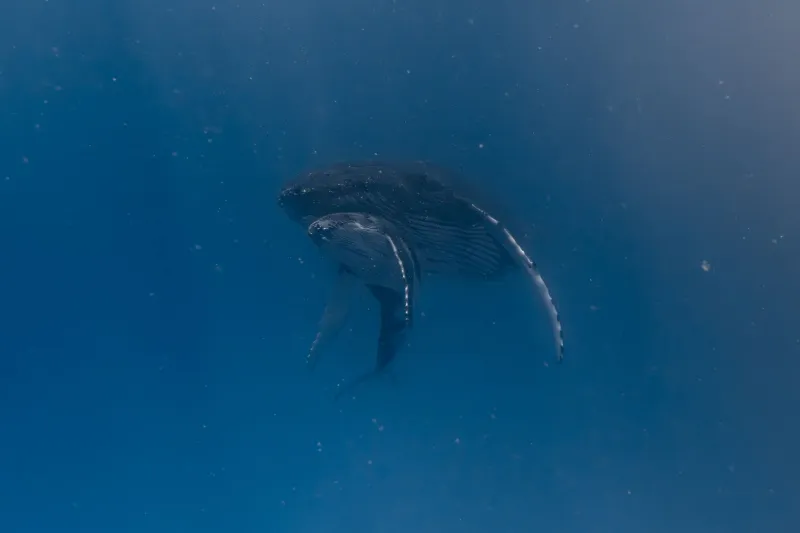
Situated between Cape Cod and Cape Ann, Stellwagen Bank is one of the most productive whale habitats on the East Coast — and one of the best places in the country to experience humpback song in context. Several whale watch operators working out of Provincetown and Gloucester have partnered with acoustic researchers to offer narrated listening experiences aboard research vessels.
Passengers get access to onboard hydrophones and real-time audio during peak humpback season (April through October). Some trips include a researcher or naturalist who can identify individual whales by their vocalizations — a level of intimacy with wildlife that most ocean experiences simply don't provide.
The Citizen Science Angle
One of the most compelling aspects of acoustic marine tourism is how naturally it lends itself to meaningful participation. Unlike many wildlife experiences where travelers are essentially passive observers, underwater sound monitoring actively benefits from more ears — both human and electronic.
Projects like NOAA's SoundCoop initiative and university-affiliated programs at institutions like Scripps Institution of Oceanography and Woods Hole Oceanographic Institution have created frameworks for citizen scientists to contribute acoustic data from recreational dives and kayak trips. Some programs provide waterproof recording equipment on loan; others simply ask participants to log observations through apps that sync with broader research databases.
For travelers who want their vacation to mean something beyond the personal experience, this is genuinely impactful. Long-term acoustic datasets are critical for tracking how shipping traffic, naval exercises, and climate-driven changes in species distribution are affecting marine communication. Your recorded dive becomes part of a scientific record.
The Quieter Sanctuaries Worth Seeking Out
Not every great acoustic experience happens at a marquee destination. Some of the most immersive underwater listening opportunities are tucked inside lesser-known protected areas that see a fraction of the visitor traffic.
Gray's Reef National Marine Sanctuary, about 17 miles off the Georgia coast, is one of the largest nearshore live-bottom reefs in the Southeast and hosts a surprising density of sonically active species. It's not heavily promoted, which means the acoustic environment is relatively undisturbed — a genuine rarity along the developed Atlantic seaboard.
Channel Islands National Marine Sanctuary off the California coast offers multi-day liveaboard experiences where guests can participate in evening hydrophone sessions as blue and fin whales move through the sanctuary's deep-water passages. The isolation of the islands means minimal vessel traffic interference — the acoustic equivalent of a dark sky preserve, but for sound.
Slowing Down Enough to Hear
There's something almost countercultural about acoustic marine tourism in an era of drone footage and Instagram-optimized wildlife encounters. It asks you to be still. To resist the urge to document and instead just... receive.
That's not always easy for travelers wired for maximum stimulation. But the guides and researchers working in this space will tell you the same thing: once you hear a humpback singing from below a research vessel, or catch the improbable symphony of a healthy reef on a hydrophone, the impulse to rush on to the next experience gets a lot quieter.
Maybe that's the whole point. The ocean has been trying to get our attention for a long time. It's worth listening.