A Year at Sea: 13 Ocean Wanderers on What the Water Actually Teaches You
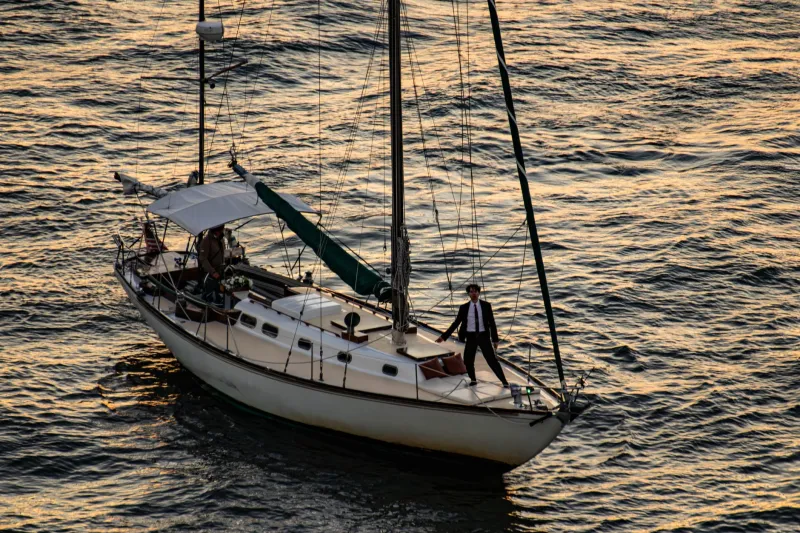
There's a version of this story that's all sunsets and dolphins. That version is real — but it's not the whole picture.
We spent several months tracking down sailors, researchers, and expedition professionals who had each spent at least a year living and working on the ocean. We asked them one question: What did the water actually teach you?
What came back was honest, sometimes uncomfortable, and occasionally profound. Here are their stories — and what you can take from them if you're thinking about your own time on the water.
"The Ocean Doesn't Care About Your Schedule"
Marcus T., 38, solo circumnavigator, departed from Annapolis, MD
Marcus spent 14 months sailing a 38-foot sloop around the world alone. He left as a project manager at a DC tech firm. He came back as something harder to categorize.
"The biggest thing I had to unlearn was urgency," he says. "I had this deeply ingrained belief that speed equaled progress. Out there, that thinking will get you killed. You wait for the weather window. You wait for the tide. You wait for the wind to shift. The ocean runs on its own schedule and you just... adapt."
He now works as a sailing instructor in the Chesapeake Bay. He says he's better at his job — and at most things — because of the patience the ocean forced on him.
"Loneliness and Solitude Are Not the Same Thing"
Dr. Priya N., 44, marine biologist, 18-month research posting aboard NOAA vessels
Priya has logged more sea days than most people accumulate in a lifetime of vacations. Her work tracking cetacean migration patterns along the Pacific Coast has taken her from the Bering Sea to the waters off Baja California.
"I used to dread the stretches when we were far offshore and communication was limited," she admits. "Then somewhere around month six, something shifted. I stopped experiencing the quiet as absence. It became this incredibly clarifying presence. I started doing my best thinking out there."
She draws a sharp distinction between loneliness — which she describes as wanting connection and not having it — and solitude, which she calls "a conversation with yourself you can't have anywhere else."
"You Learn What You Actually Need"
Jonah R., 29, blue-water sailing guide, Pacific crossing veteran
Jonah has crossed the Pacific three times as a professional delivery skipper and expedition guide, most recently on a 47-day passage from San Francisco to the Marquesas Islands.
"Your world shrinks to the boat. Everything you own fits in a 6-foot berth. And you realize almost immediately that most of what you left behind — the stuff, the noise, the obligations — wasn't actually serving you. It was just filling space."
He's not preaching minimalism, he's quick to add. He just found that the ocean has a way of clarifying what's essential. "After 47 days, I knew exactly what mattered. The list was shorter than I expected."
"Fear Is Information, Not a Stop Sign"
Carmen V., 52, ocean rowing athlete and expedition leader
Carmen rowed across the Atlantic — solo — in 68 days. She's now preparing for a Pacific attempt. She talks about fear the way a mechanic talks about engine noise: as data to be interpreted, not ignored or suppressed.
"There were moments on the Atlantic where I was genuinely terrified. Big seas, equipment failures, a capsize at night. And I learned that the fear itself wasn't the problem. Ignoring it was the problem. Once I started listening to it — really listening — it became one of my most useful tools."
Her advice for anyone planning an extended ocean trip: "Don't try to be fearless. Try to be fear-fluent."
"The Ocean Teaches Collaboration Whether You Want It To or Not"
The crew of research vessel Meridian, collective interview
Five researchers aboard a 78-foot research vessel spent 11 months studying deep-sea thermal vent ecosystems off the Pacific Northwest coast. We spoke to four of them together, and their answers kept circling back to the same theme: living in close quarters on the water forces a kind of radical interdependence.
"You can't be difficult on a boat," says oceanographer Dana F. "Not for long, anyway. You either figure out how to function as a unit or the whole thing falls apart. I've worked in labs, universities, big institutions — I've never learned more about collaboration than I did in those 11 months."
Physical oceanographer Tom S. puts it more bluntly: "The sea doesn't reward ego."
"Stillness Isn't Boring. We've Just Forgotten How to Do It."
Lena W., 34, former corporate attorney turned liveaboard sailor
Lena left a partnership track at a New York law firm to sail the East Coast and Bahamas for 16 months aboard a 42-foot catamaran. She expected to miss the pace of her old life. She didn't.
"In New York, I was constantly producing — briefs, arguments, results. On the boat, there were entire days where the big accomplishment was anchoring safely in a protected cove and watching the light change. I thought I'd go crazy. Instead, I felt more like myself than I had in years."
She returned to law — but on her own terms, in a smaller firm, with better boundaries. "The ocean gave me permission to stop performing."
Common Threads: What Nearly Everyone Said
Across all 13 conversations, a handful of themes kept surfacing regardless of whether the person was a professional mariner, a researcher, or a first-time long-distance sailor.
Time changes. Almost everyone described a shift in how they experienced time — not as something to be managed, but as something to move through. Days felt longer, in a good way.
The body becomes central. Weather, fatigue, hunger, cold — extended ocean life reconnects people with physical reality in ways that desk-bound life doesn't. Most described this as grounding rather than exhausting.
Purpose clarifies. More than half mentioned returning to shore with a sharper sense of what they wanted from their lives — not because the ocean provided answers, but because it stripped away the noise that was drowning the questions.
If You Want Your Own Year on the Water
You don't have to circumnavigate the globe to get a taste of what these wanderers found. Here's a realistic progression for US-based travelers curious about extended maritime life.
Start with a liveaboard weekend. Many marina communities offer liveaboard rentals for 2–4 nights. It's the fastest way to find out whether confined quarters and tidal rhythms suit your personality before you commit to anything longer.
Take an offshore sailing course. The American Sailing Association's Coastal Cruising (ASA 103) and Bareboat Chartering (ASA 104) certifications are the standard on-ramp. You'll learn enough to crew on longer passages within a season.
Consider crewing before skipppering. Websites like FindACrew.net and Crewseekers connect experienced sailors with people who want passage-making experience. You can cross an ocean as a crew member with no boat of your own.
Talk to people who've done it. Every person we interviewed said the same thing: the sailing and ocean exploration community is extraordinarily generous with knowledge. Show up at a marina, ask questions, and be willing to help with boat work. Doors open fast.
The ocean is patient. It'll wait for you to be ready. And according to everyone who's spent real time on it, the wait is worth it.