The Sound of Nothing: America's Quietest Coastlines Are Calling — and People Are Actually Listening
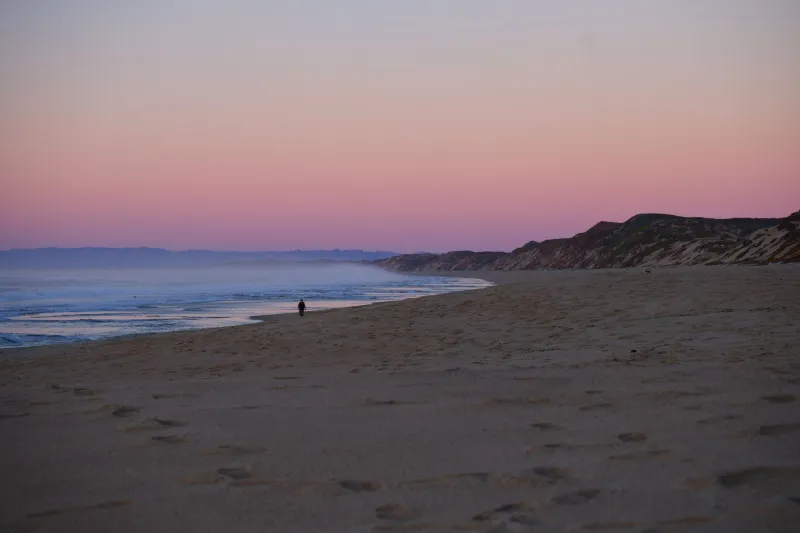
At some point between the airport announcements, the GPS rerouting, the podcast playing through the rental car, and the beach bar's outdoor speakers pumping something vaguely tropical, you might find yourself wondering: when did the ocean get so loud?
Not the ocean itself, obviously. The ocean is doing exactly what it's always done — waves breaking, wind moving across water, the occasional seal making its opinions known. What got loud was everything humans dragged to the shore with them. And now, in a kind of quiet rebellion, a growing number of travelers are heading to the coast specifically to escape it.
Call it acoustic tourism. Call it sensory detox. Call it whatever you want — the people doing it just call it necessary.
Why Silence Became a Destination
Noise pollution research has been building for decades, but it's only recently started to shape how people plan their vacations. Studies from the National Park Service's Natural Sounds and Night Skies Division have found that natural soundscapes — wind, waves, birdsong, the low hum of a healthy marine environment — have measurable effects on stress hormones, heart rate, and cognitive recovery. The ocean, it turns out, isn't just pretty. It's pharmacological, if you can actually hear it.
The problem is that most popular coastal destinations have become acoustically indistinguishable from the cities people are trying to escape. Boat traffic, jet ski rentals, beachfront construction, drone photography, and the general social noise of crowded beaches all layer on top of each other until the natural soundscape is buried completely.
Which is exactly why the places that haven't been swallowed by that noise are starting to feel almost sacred.
The Olympic Peninsula, Washington
If you want to understand what an undisturbed coastal soundscape actually feels like, the stretch of Pacific coastline running through Olympic National Park is about as close as you'll get in the continental United States. The wilderness beaches here — Rialto, Ruby, Shi Shi — are accessible only by trail or a significant drive on unpaved roads, which keeps the crowds thin and the noise floor low.
Stand at the water's edge on a calm morning and what you hear is layered and complex: the deep percussion of Pacific swells, the wind moving through the Sitka spruce behind you, the calls of shorebirds working the tideline. No jet skis. No speakers. No ambient hum of a parking lot.
The National Park Service actively monitors soundscapes in Olympic, and the data consistently shows it as one of the quietest places in the lower 48. That's not an accident — it's the result of active management and the simple fact that getting here requires effort.
The Apostle Islands, Lake Superior
The Great Lakes don't always get their due as a coastal destination, but Lake Superior's Apostle Islands National Lakeshore in northern Wisconsin is worth the recalibration. The archipelago of 21 islands sits in some of the least-trafficked water in the Midwest, and the acoustic environment reflects it.
Kayaking between islands here — especially in September and October when summer crowds have thinned — offers something genuinely rare: open water silence. The lake doesn't have the same wave frequency as the ocean, but it produces its own deep, rhythmic sound that visitors consistently describe as meditative. Several outfitters based in Bayfield, Wisconsin, offer guided paddle trips specifically designed around slow, quiet exploration.
Bonus: the sea caves along the mainland unit of the lakeshore amplify natural sounds in ways that feel almost architectural. Water moving through a sandstone cave produces a low resonance that you feel as much as hear.
Stellwagen Bank National Marine Sanctuary, Massachusetts
For travelers who want to engage with the science behind acoustic solitude rather than just experience it, Stellwagen Bank off the coast of Cape Cod offers something unique. The sanctuary has been at the center of ongoing research into underwater noise pollution and its effects on whale communication — and that research has shaped how vessel traffic is managed in the area.
Surface-level, this means that whale watching tours operating in the sanctuary are held to stricter noise and proximity standards than in many other areas. For visitors, it translates to a noticeably different experience — quieter boat approaches, more time drifting with engines cut, and the genuine possibility of hearing whale vocalizations without electronic amplification.
The sanctuary's visitor center in Provincetown is a good first stop, and the staff there can point you toward tour operators who take the acoustic stewardship piece seriously.
Finding Your Own Quiet
You don't necessarily need to travel to a national park or a designated sanctuary to find acoustic solitude on the coast. Some of the quietest coastal experiences available in the US are simply a matter of timing and location strategy.
Go early or late. The acoustic environment of almost any beach is dramatically different at 6 a.m. versus noon. Early morning visits, especially outside of peak summer season, often reveal a soundscape that feels completely removed from the crowded afternoon version of the same place.
Look for beaches without road access. Any coastal spot that requires a boat, a kayak, or a meaningful hike to reach will almost always be quieter than one with a parking lot attached.
Avoid peak season. October through April along most US coastlines offers dramatically reduced human noise levels, and the natural soundscape often intensifies — stronger winds, bigger swells, more dramatic weather.
Leave your own devices behind. This sounds obvious, but it's worth saying: a pair of earbuds or a phone speaker will erase everything you came for. The whole point is to hear what's actually there.
What You're Actually Listening For
People who make acoustic solitude a regular part of their travel practice talk about a kind of recalibration that happens after a day or two in genuinely quiet coastal environments. The brain, apparently, needs time to stop filtering for threats and start actually listening.
What you eventually hear, once that shift happens, is more interesting than silence. It's texture — the difference between a long-period swell and a choppy wind chop, the way sound travels differently over open water versus rocky headland, the almost subliminal frequencies of a healthy kelp bed. The ocean has been making these sounds for longer than humans have been around to hear them.
Turning that back on — even briefly — is worth the drive.